Imagine you and I are identical twins. We can look however you choose.
We were uncommonly close until some family, economic, or geopolitical upheaval separated us at age 12. We haven’t seen or heard from each other since. Now we’re 40. (I’m imagining too.) You’ve missed me, wondered how I’m doing and what my life is like, and longed to share all sorts of your life’s moments.
You’ve searched for me online over the years without success, and small wonder. Our surname is Jones and our given names Robert and Michael (or Mary and Elizabeth, as you please).
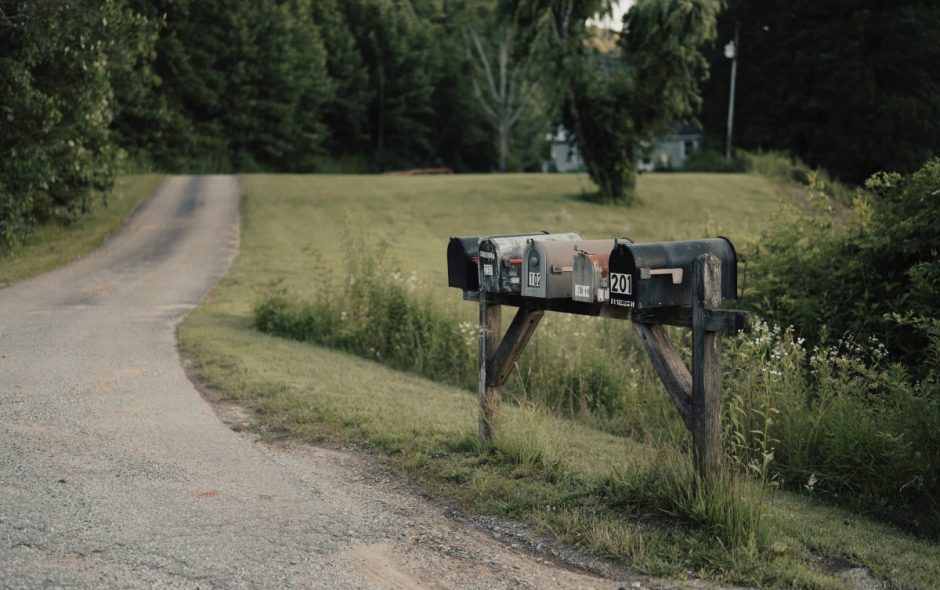
Today you find a letter from me in your mailbox, four typed pages with my handwritten signature at the end, plus a small photo. (We still look alike.) You read hungrily of more adventures than you’ve had and the natural beauties of the place where I now live. I mention childhood memories you don’t recall, but we all forget different things.
You’re delighted to reconnect. Before you reach the end, you restart at the beginning, you’re enjoying this so much.
Finally, you read my last lines: “I hate writing, so I had ChatGPT compose this. It’s not all true, but I wanted to send a long letter, now that I’ve found you.”
How do you feel now?
What, after all, is wrong with letting a machine compose my personal letters? We have the technology. I asked it for specific examples of times when I’ve missed you. I didn’t supply any, so it invented them. I told it to describe the stunning sunsets here, my memories of us standing together against the world, and my adventures as an insurance adjuster in hurricane country. It invented all that too.
What’s wrong here is my reaching out with a fake human connection, not a real one. Wouldn’t you have preferred two splotchy, handwritten, awkwardly composed pages, if they were my real story in my own words? Or I could have dictated my letter and let the AI clean it up. That would still have been a letter from me, not my machine.
AI will gradually improve at pretending to be personal, pretending to connect, and pretending the verbal and visual content it generates is art. But it will never offer human-to-human connections, only empty calories: a shiny, soulless, convenient counterfeit.
The more we forget that only humans can make human-to-human connections; the more we use artificial diversions on our screens to replace actual human relationships and experiences; the more we rely in education and business on AI-generated summaries instead of actually reading what a human wrote; the more we let machines replace our own personal and artistic expression; the more we prioritize our own digital entertainment and avoid connecting and doing good among humans—the less human we will be.
When we delegate a thing to our machines, our own ability in that thing decreases. When that thing is our thinking, we invite oppression and exploitation. When we turn to our machines as an alternative to connecting with fellow humans, we diminish our ability to be human at all.
So write the letter. Don’t have Claude or ChatGPT do it.
Read the real, human-written book, not an AI- or even human-generated summary, even if the book is fiction. Whatever other human insights fiction may offer, there’s also a valuable human connection between reader and author.
Don’t pretend human experience can be reduced to content or data points, or that simulations are adequate substitutes for all human experience.
Advocate for STEAM instead of STEM. (The A is for arts and humanities.) Unmediated and unrestrained, STEM ultimately produces high-tech barbarians.
Get out and do real things in the real world with real people. Watch real people doing athletic and artistic things. And when NPR (July 2) asks, “If a bot relationship FEELS real, should we care that it’s not?” or Ezra Klein exults in the New York Times (August 24) that AI can now be—as in replace—our advisers, friends, therapists, coaches, doctors, personal trainers, tutors, and even lovers, say “Get thee behind me, Satan” or a secular equivalent and get back to connecting with real people. Be more human, not less.
This column was published in The American Fork Citizenin September 2025. Reprinted with permission. Image by Tolga Ahmetler on Unsplash.