Reading Tom Hanks

Tom Hanks and I have something in common: we both write fiction. If you’ve read this monthly column for a while, you may have known that about me. But did you know that about him?

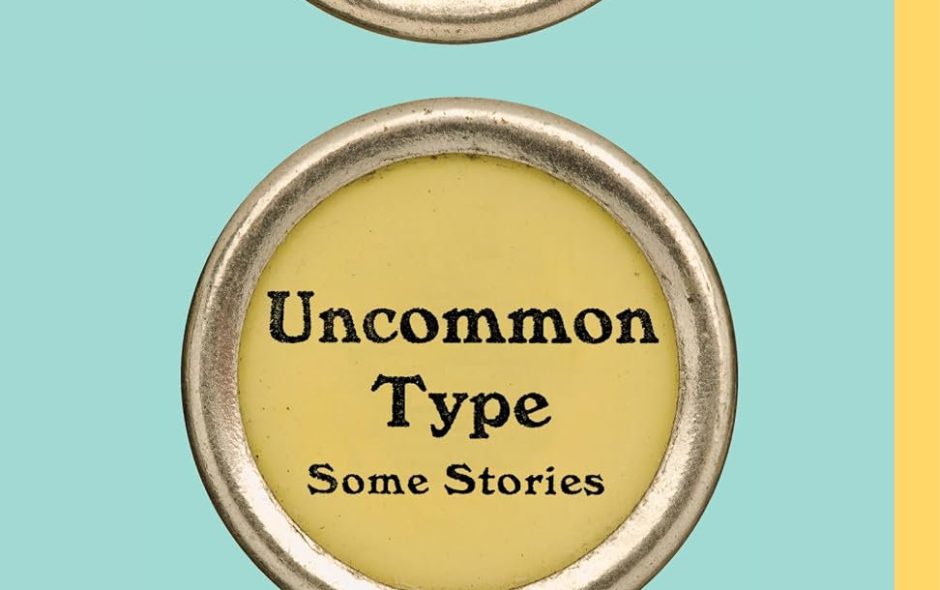
Several years ago, when his short story collection, Uncommon Type, was published, I read the first several pages, found it promising, and bought it. I didn’t read it right away; my TBR (to be read) pile is rather like a mountain range.

When I finally picked it up, my expectations were modest. I hoped to enjoy some of the stories, but I wondered if celebrity had more to do with their publication than quality. Long story short, so to speak, it was quality.

I love long novels, but short stories have their advantages. (By short I mean between five and forty printed pages, give or take.) For one thing, they offer a complete reading experience in one sitting.

They stand alone, but in an anthology or collection they may also share a common thread. In Uncommon Type each story has a typewriter in it. In “These Are the Meditations of My Heart,” typewriters play a major role, though they’re already antiques.

A recently divorced woman is moving on, putting “the Knothead” behind her. She buys a toy typewriter for five dollars at a church fundraiser on a whim. At home she wonders what one does with a typewriter in the twenty-first century. She thinks of six things immediately.

The relic barely works and cannot be repaired, so she finds a shop and trades it in for a sixty-year-old, state-of-the-art Swiss model. The old man in the shop could be in a Harry Potter book, selling wands to young wizards. He all but says that a typewriter chooses its owner, not the reverse.

It’s a charming, thought-provoking, artfully layered story, about much more than typewriters, and it fits neatly into seventeen pages.

Short stories can’t be as complex as novels, but a well-crafted short story can conjure a whole world, bring a few characters to life, and engage the mind and heart in multiple ways at once. In fact, some of our best writing is found in short stories—because they’re short.

As a writer I may spend dozens of hours creating one short story. That sounds like a lot, but it’s not. A novel takes months or years. Because my investment is so much smaller, I can take bigger risks in a short story. I can try things I couldn’t sustain for hundreds of pages and tell tales that are too small for a novel. I can experiment. I can be weird.

This has advantages for the reader too. I usually don’t even start reading a novel unless I already expect to enjoy it. But I’ll read a short story in any genre by any author just because it’s there. Some of our best reading happens with short stories.

Because it’s short, I can take more risks as a reader too. And if the one I just read didn’t land for me, the next one is a different story. I’m a lot more willing to turn the page and take a chance.

One of the longer short stories in Uncommon Type is “The Past Is Important to Us,” which combines near-future sci fi with time travel to the past. As it begins, two men are flying to New York City in a private jet with a transparent fuselage. Imagine looking through the floor of your airplane to the ground 40,000 feet below.

These are among the richest men in the world, having invented and patented the Shuffle-Access Digital Valve-Relay. One of them is hooked on time-travel vacations through a company which uses their invention. You’d think going back in time for just 22 hours, to a specific New York City hotel room on June 8, 1939, during the World’s Fair, might not be worth repeating again and again at $6 million a pop, but Bert Allenberry thinks it is.

How did the future look from the past? How will the past look from the future? What if we could go back and try a different life? It’s a wrenching, surprising tale.

The whole collection worked for me. Tom Hanks, beloved actor and director, can flat-out write. His 2024 novel, The Making of Another Motion Picture Masterpiece, is now in my TBR pile, perhaps not for long.


Originally published by The American Fork Citizen in July 2026. Reprinted with permission.


From the Author

David Rodeback

Thanks for reading!

Comments are always welcome, within the bounds of common civility and relevance. There’s a place for them below. Absolutely no marketing, please.

Subscribe below to receive alerts of new posts by e-email.

If you liked what you read here, please consider sharing.

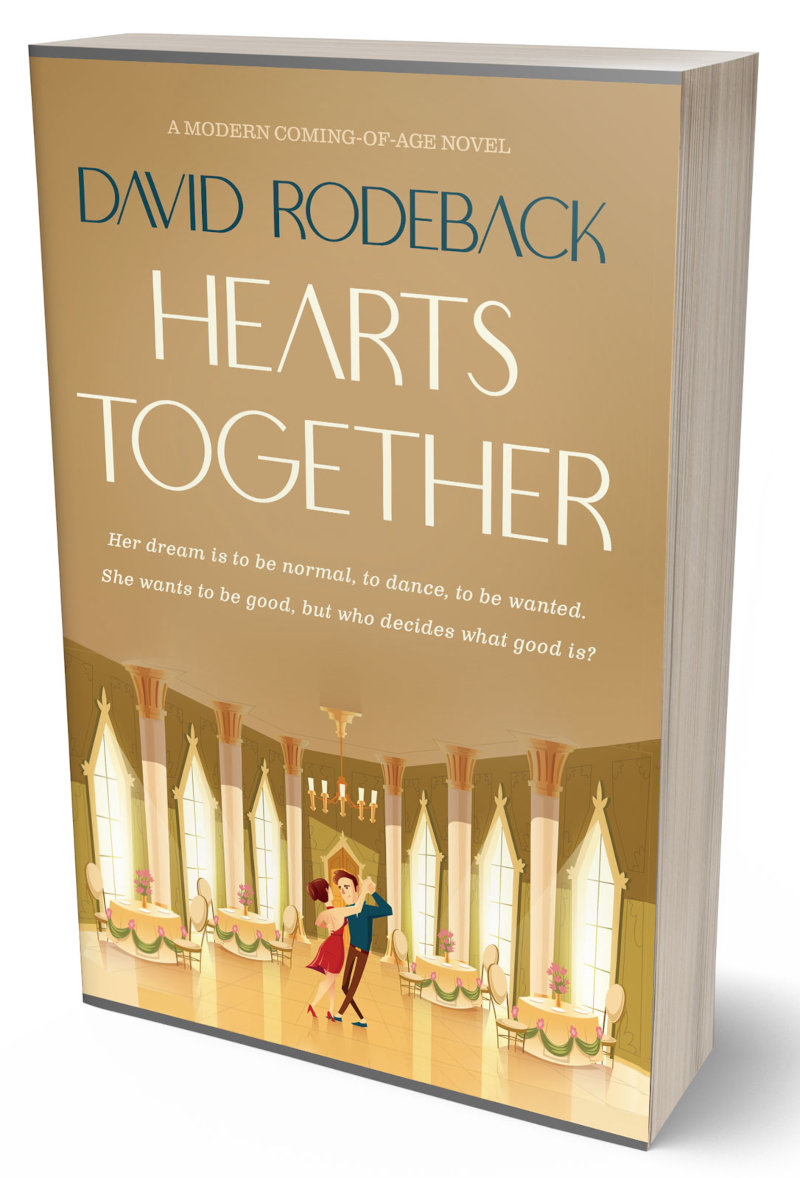
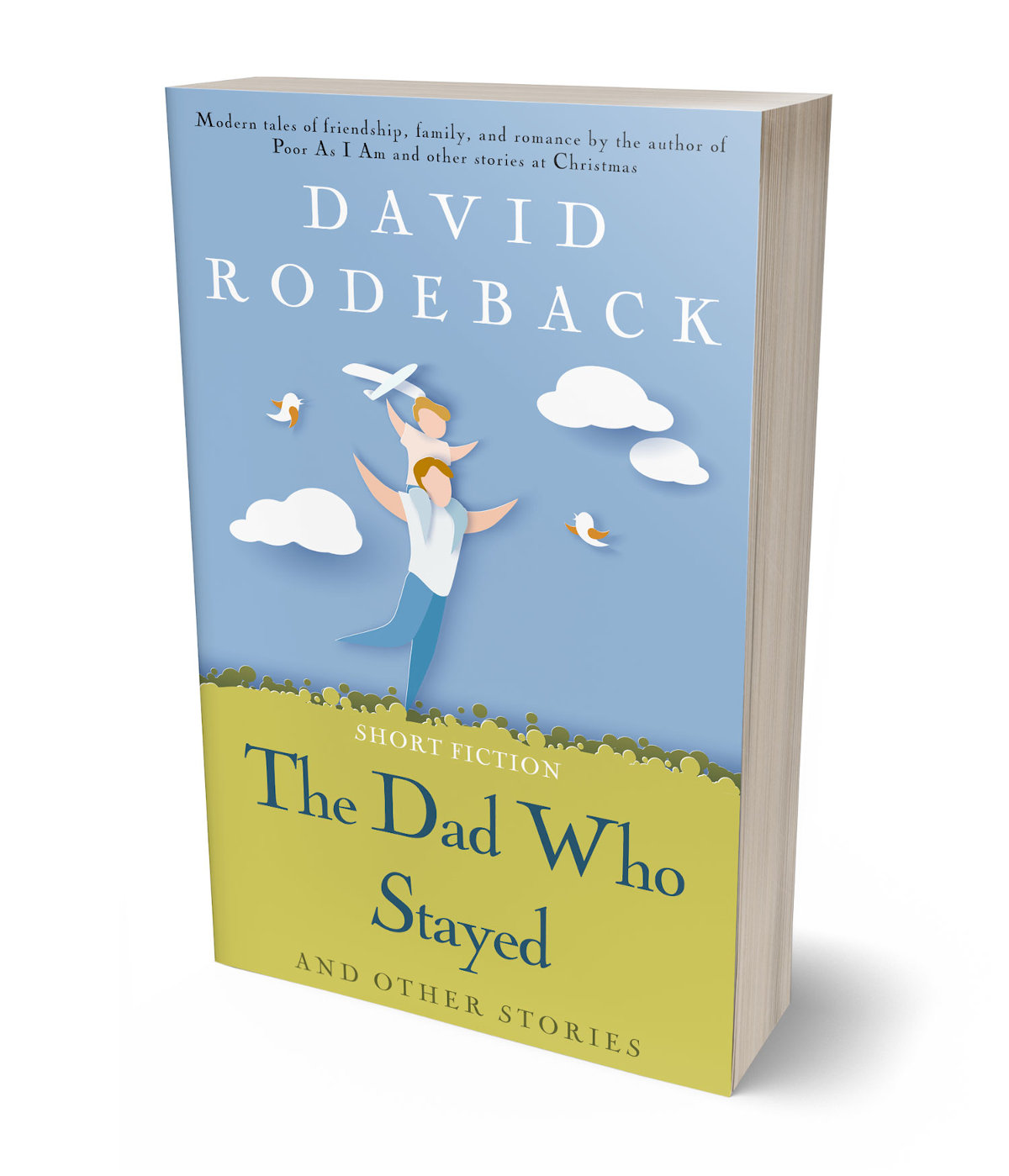
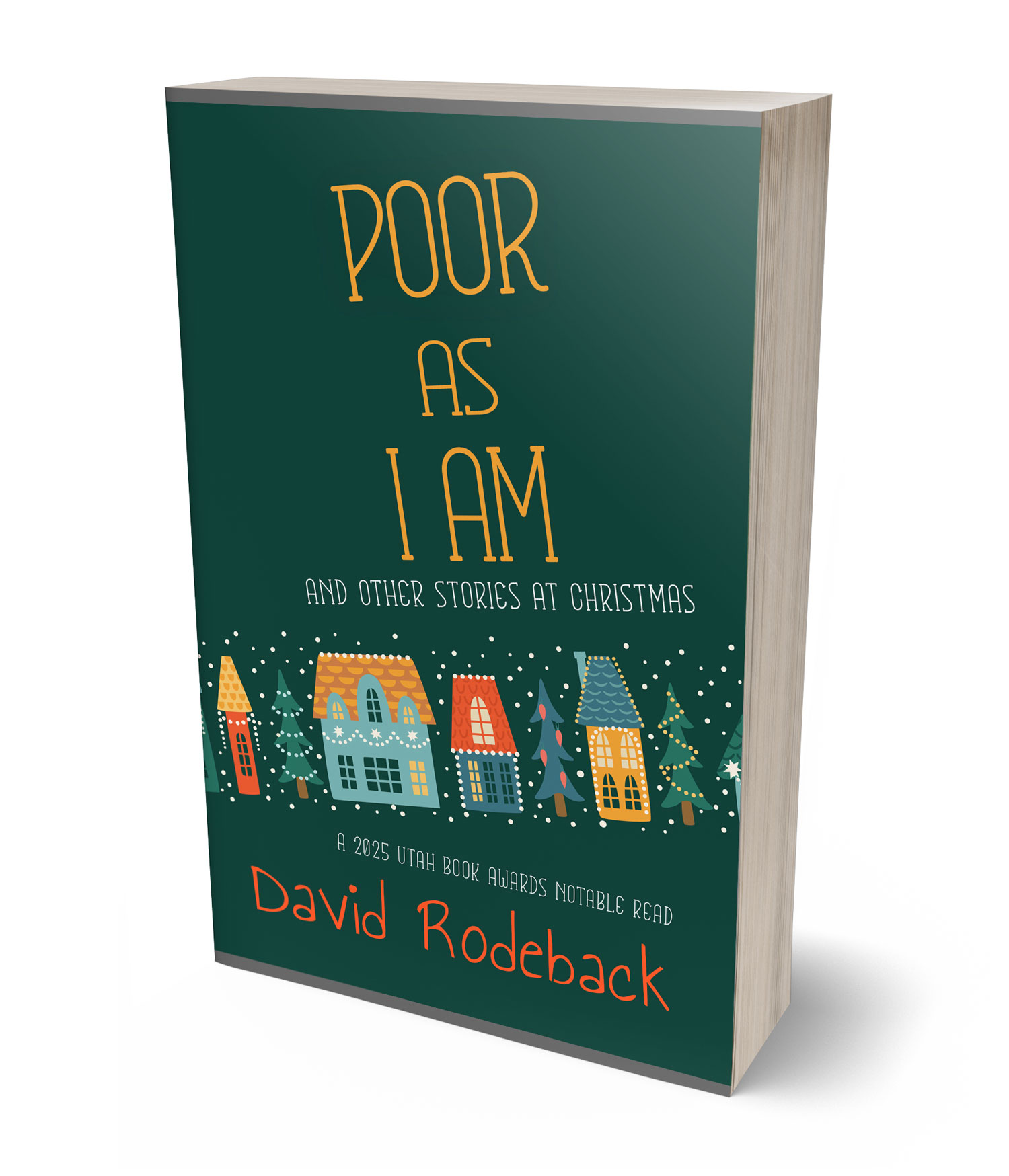
Do you enjoy reading fiction too? My two award-winning collections of short fiction and my new novel are available online at the usual retailers. Visit my press imprint, 60 East Press, to learn more.
The Lusty Month of May (Bookish Version)

Remember that song in Camelot, “The Lusty Month of May”? If not, I’ll wait while you divert to YouTube for a moment. Search “lusty month of May Sierra Boggess.” If you’re in a hurry, skip the first 2:40 of the introduction. But seriously, don’t be in a hurry.

Now that you’re back, a proposition: May, not February, is the month of romance.

We’ll chat here with two Utah romance authors. I’ll note some believable and unbelievable statistics I found. And we’ll visit a romance bookstore in Lehi to ask, of all things, do men read romance? Should they? Why? We’ll finish with a line from Shakespeare.

Bookstore Memories

A teenage son and I were at Powell’s City of Books in Portland, a recurring pilgrimage. I was browsing in Fiction when his distress call came.

He was half a building away, lurking in his favorite subsection of History. He had filled an entire basket with books to buy, and he needed help.

To his credit, he already knew he needed two kinds of help. He needed time to reduce his selections to a manageable stack of several. That took him most of an hour. Then he would still need more funds than he’d saved for books. He solicited and quickly received contributions from bookish family members, and he came away with a heartwarming but reasonable stack of books.

I like to listen to people in bookstores. I’ve overheard one sort of conversation many times, especially at used bookstores. The child in it can be a first-grader or a teen, and it goes about the same.

Reading Aloud Is for Adults Too

Wednesday, February 5, was the 15th Annual World Read Aloud Day. Its creator, LitWorld, focuses mostly on the benefits of reading aloud to children. Good reasons for doing that reach far beyond language skills and a lifelong love of books.

The benefits of reading aloud for youth and adults get far less attention, but they’re real. I don’t mean just reading a witty or scandalous social media post or a short excerpt of an article. I mean reading entire essays, stories, even books aloud.

Granted, reading aloud can be bad manners—on a train, plane, or quiet library floor, or anywhere else we would disturb people to whom we’re not reading. And it’s slower. There’s not time to read all the books anyway. We’d compound that problem if we always read aloud.

In Which I Read My Fiction Aloud for World Read Aloud Day 2025

Today is World Read Aloud Day—or WRAD, because the world needs more acronyms. Is this the first you’re hearing of it?

The website says “15th annual,” but I first encountered WRAD only last year. I was not in time to do anything about it, except to make a note to do something about it this year.

A nonprofit called LitWorld created WRAD “to celebrate the power of reading aloud to create community and amplify new stories, and to advocate for literacy as a foundational human right.” Worthy causes all. Their website, LitWorld.org, has an activity packet, a social media kit, a web form to report your own activities, and many other resources, including links to—you guessed it—people reading aloud.

LitWorld and WRAD mostly focus on reading aloud to children, and we could make a long list of the benefits of doing that. But just between you and me, good things happen to youth and adults too, when we read aloud or are read to. I submitted a column to a local newspaper this week on that very topic. (I’ll link to it here if and when it’s published.)

To me, the obvious thing to do for WRAD is (ahem) to read aloud. So I got up early to read into a good microphone Monday morning before work, did some light editing after work, and now it’s just under 20 minutes of audio, with me reading three pieces of my own fiction aloud.

Poke the Algorithms in the Eye: Read Books in 2025

Intricate modern algorithms have their place but don’t seem to know their place. They and their faceless custodians would rule, not serve, the world, and never mind the human cost. Some people blame algorithms for our intellectual, political, and cultural bubbles and the toxic tribalism that results. I blame them too, in part.

Social media algorithms would rather please or provoke than inform or connect. They aim to keep us scrolling, clicking, sharing, flaming, and otherwise engaging at the expense of everything else, including work, family, friends, neighbors, quiet introspection, real-world compassion, and calm perspective.

Amazon’s algorithm, understandably, likes to show me things I might buy. It’s not very clever sometimes. A good half of those “We’ve found a book you’ll love” e-mails point me to books I found myself, online or IRL, and already added to my Amazon wish lists. I don’t remember the last time I loved any of the other suggestions.

Writing What I Believe, Writing What I Love (Part 3)

This post concludes my essay on writing what I believe and writing what I love. In the first part I explained that it includes reading what I love, and that includes long novels. In the second part I wrote of hope and of young people who restore my hope. This concluding part touches on my reasons for choosing to write what I write, with thoughts about my audience and what it is that I am writing.

Writing My First Novel

Something else happened in those months of filmmaking, which has directly influenced my aspirations as a writer. May I hazard another metaphor? (I can hear you saying, “Not if you’re asking permission first.” Forsooth.)

I used to prefer watching high school marching band performances from high in the stadium, where patterns and formations are clear. In making that film, I learned to prefer a closer view. Now I want to be in the front row, if they won’t let me on the sideline. I like to watch individual performers, and I think I’ve figured out why.

Hidden in Plain View

In helping to make that film, I peered behind the scenes for months, firsthand and by watching many hours of raw video footage. I discussed the marching band experience at length with dozens of students, parents, and staff, mostly one at a time. I asked ninth graders and seniors alike why they joined the band and why they stayed in it when the marching got rough. I recalled my own band experience (though darkly, through the glass of decades). And I spent hours and hours with a couple of talented filmmakers, as we tried to do justice to it all in 80-plus minutes of sights and sound and words.

You can watch our film if you wish; I still enjoy it. But the hours of interviews we left on the cutting room floor affected me as much as the fragments we could include.

In that process I learned to see beauties beneath and behind (if they are not actually not beside or before) the visual and musical beauty of the show. True, each person’s performance is part of the whole, and great effort goes into uniformity of appearance, movement, and sound. But these youth are more than cogs in a machine, if you approach closely enough and watch them long enough and strive to have eyes to see.

Writing What I Believe, Writing What I Love (Part 2)

This post continues my thoughts on writing what I believe and writing what I love. In the first part I explained that it includes reading what I love, and that includes long novels. This is partly an artist’s manifesto – that term is still too grand – and partly a look behind the curtain or under the hood. It is the back story of stories I have written, am writing, and live.

This is the second of three parts.

What I Believe

I don’t think it’s an overstatement to say that what I want to write is born of and sustained by what I believe, not just what I love. Among the many things I believe, here are the ones I most want to write about.

I believe there is good in virtually everyone. Likewise, there is a measure of evil in virtually everyone. “God and the devil are fighting,” said Dmitri Karamazov, “and the battlefield is the [human heart].”

I believe that good can and often does triumph in an individual heart and in the world at large, and it will continue to do so in the future, more often than not.

Based on long and varied experience with people I didn’t think were interesting at first, I believe there is something interesting in everyone – something worthy of our notice and reflection, and often enough our admiration.