Wanted: 250 American Fork Memories

Can you spare a happy memory? It’s for a birthday celebration.

I was recently invited to be the guest editor for a project we’re calling American Fork Memories. It’s part of American Fork’s official celebration of our nation’s 250th birthday.

From May 1 through August 31, we’re gathering and publishing 250 short, positive memories of life and work in American Fork. You can read them as we post them at afmemories.substack.com. When you go there, Substack will ask you to join and subscribe—both are free and require only an e-mail address—but you can bypass that and just read. If you do join Substack and subscribe to American Fork Memories, we’ll send you digests of memories by e-mail from time to time.

Just remembering is an act of civic and moral consequence, but please consider writing and submitting one of your memories. It should be 200–300 words long, roughly one-third the length of this column. We’ll publish one memory per person. Details and instructions for submitting your memory are at our Substack.

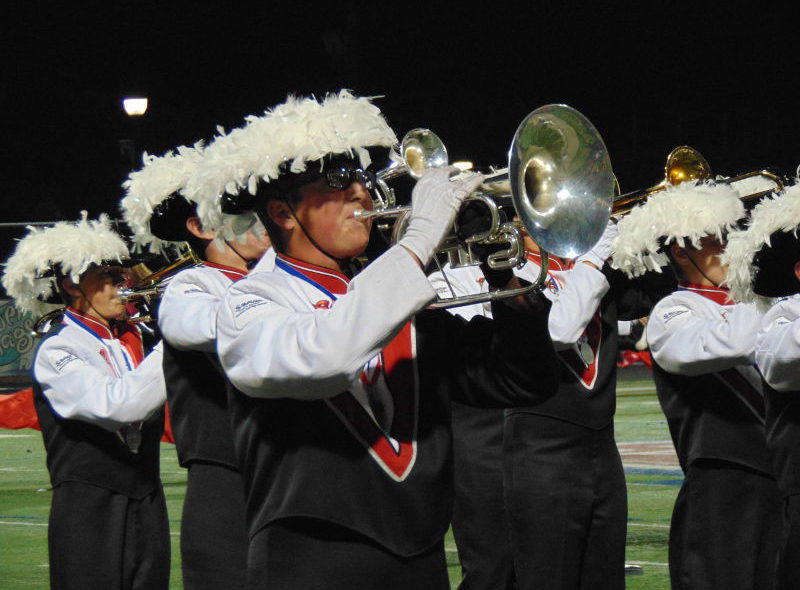
I already wrote mine. I chose one about the American Fork High School Marching Band. I connected it to two tragic memories, but the editor (cough) found it positive enough to qualify.

I’ve lived in six states and studied in Russia for a while. I’ve found good people in all those places. Some of my memories could have happened anywhere, I suppose, but they happened in American Fork. I’ll mention a few among many.

My New Year’s Bookbuying Resolution — Join Me!

On Saturday, on my way out of Home Depot in American Fork (Utah), I saw something which surprised and delighted me: a Barnes and Noble bookstore. I had never seen it there before, and technically it’s not there now, but I wasn’t hallucinating. It’s “coming soon,” opening in “winter 2024.” This inspires a new year’s bookbuying resolution or two, in which I’d love for you to join me.

I welcome the new arrival. Like the arrival years ago of Home Depot in American Fork and Lowe’s across the street in Lehi, its proximity means I will expend less time and fuel traveling to Orem or wherever else. That means, in theory, more money to buy books and more time to read them. There’s a tiny environmental impact too.

Barnes and Noble American Fork - Bookbuying Resolution

However, silver clouds have dark linings. For me this silver cloud has two: one from the past, nostalgic and not very useful in the present, and one for the not-too-distant future, which you and I can do something about.

Hence my resolution. You’re welcome to share it, once I’ve explained, which is after some related chatter, er, context.

Casting Call for American Fork, August 25, 26, and 28

Depending on how this goes, you could be locally famous when we’re done. Probably not, but stranger things have happened.

The American Fork Heritage and History Pageant is being revived this year on the evenings of Friday, August 25; Saturday, August 26; and Monday, August 28.

This is my last-minute casting call for one of the vignettes. I’ll tell you a bit about the pageant, and then I’ll tell you the roles we’re trying to fill and some information about filling them.

About that American Fork Critique Group

It’s a Critique Group

Last time, I told you about Good AF Writers, the critique group held twice a month by the American Fork chapter of the League of Utah Writers. (I’m assuming the AF is for American Fork.) It’s every second and fourth Tuesday Thursday at 6:00 p.m. at the American Fork Library, and you can read more of the basics in that previous post. There’s also a Facebook group to watch for new, updates, and more.

Here I’ll give you a better taste of how it works, in case you’re on the fence about whether it will work for you.

Our meetings consist mostly of three activities: reading (aloud), giving critiques, and receiving critiques. Each of these could make someone squirm, I know, but it’s the price of improving as writers. We try to be kind, helpful, and candid.

How It Works: Reading

Some or all of the writers in the meeting will read excerpts from something they’re writing, or the whole thing, if it’s very short. They may or may not preface their reading with a brief explanation of the work, of what has happened previously, or what sorts of help they especially want. It’s all on a clock; unless the meeting is especially crowded or we’re running late, each reader gets up to seven minutes for the reading itself and any introductory explanations.

man in bow tie reading

In the meetings I’ve attended, I’ve read from three short stories (one written that day on the train, because an idea struck), the first and second chapters of a novel I’m polishing, and an essay I drafted a couple of years ago and have revisited a couple of times, but which really isn’t working yet.

After each reading, the author circulates a signup sheet. Anyone who wants to read more and provide a critique at the next meeting will sign up. Sometimes two people sign up; sometimes it’s six or seven.

After the meeting the author sends out the piece – up to 2,500 words – by e-mail, at least a week in advance of the next meeting, so everyone who signed up has time to read, reread, and critique it.

Writing in American Fork (If You’re Serious)

The Elevator Speech

American Fork’s chapter of the League of Utah Writers (LUW) meets twice monthly, on the second and fourth Tuesdays Thursday of the month, at 6:00 p.m. We usually meet in the American Fork Library, in the smaller of the two conference rooms near the east entrance, but check the Good AF Writers Facebook group for current information. The chapter itself is just a few months old, and new members are always welcome.

There’s a Facebook group, Good AF Writers. Take the name as a fact or an aspiration, as you choose.

I’m told that different LUW chapters run their meetings differently. In our meetings, those who bring writing for critique read from it aloud for several minutes, then circulate a sign-up sheet. Anyone who wants to read more and provide an oral and written critique at the next meeting supplies a name and an e-mail address. The author sends out the piece, usually in a Word doc, at least a week before the next meeting. We limit the length of that to about 2,500 words – lately down from 5,000 words – to reduce the workload for critics. (You can always bring in the next chunk next time.)

We who signed up as critics then read and reread your piece, offer a brief oral critique (generally not more than several minutes) at the next meeting – assuming you’re there – then send the Word doc back to you with any markup and comments we may have added. Sometimes you get a lot, sometimes you get a little.

It works.

Tokens of Thanks

One of my first conscious acts on this Thanksgiving morning was to pull a folder from my file cabinet and thumb through it. It’s a file I started years ago. It’s full of thank-you notes people have sent me. (And yes, thanking me is the reverse of this day’s proper theme, but it leads there in its way.)

Many of them are from my years as an LDS (Mormon) bishop in American Fork, Utah, or from my time in a similar role in Ithaca, New York. This is not because bishops are the least bit more wonderful than anyone else, but because a pastor’s relationship with his or her congregation naturally includes being conspicuously involved in the difficulties of their lives, in both public and private ways — and because we get a lot of credit for splendid things done by others.

Some of my favorite expressions are not written at all. One man with whom I worked, as he endured severe, long-term trials, gave me a four-pound specimen from his petrified wood collection, because he wanted to give something but couldn’t think of anything else he had to give. Another gave me a wool hat which an Afghan tribal leader (I say warlord, to impress people) gave him as token of thanks for service to him and his people.

The Gift of Marching Band

American Fork

I’m driving south to St. George, Utah, today for my middle son’s last two competitions as a member of the American Fork High School Marching Band. If my youngest son doesn’t change his mind in the next few years, this will be my last weekend with a child competing in the marching band.

Today is the Red Rocks Invitational, which is also the Utah state championship. Tomorrow is the Bands of America Western Regional, which draws fine bands from Utah and other western states, including California.

These are also John Miller’s last two marching band competitions before he retires next spring, after 30 years as Director of Bands at AFHS.

And last week at Pleasant Grove High School, the AFHS Marching Band hosted the final competition of the regular season, the Mt. Timpanogos Marching Band Competition, where over 3,000 students in 43 bands gathered from schools in Utah and Idaho.

All these lasts and possible lasts inspire some thoughts.

Psychosis

I find band parent Mark Standing on the highest row of the stands at Pleasant Grove High School’s football stadium. He and I work with a few others on the American Fork High School Band Booster Publicity Committee, feeding press releases, stories, and commentary to print and broadcast media. We’re at the Mt. Timpanogos Marching Band Competition, so we’re technically working, but it’s that rare sort of work they must mean when they say, “Find a job you love, and you’ll never work a day in your life.” Regrettably, we can’t support our families at this; it pays exactly 100% less than our day jobs.

a band at Mt Timp Mark gestures toward the blanket next to him and says, “She’ll be back in a few minutes. She’s from Sky View, and she says she’s a psychotic band mom.”

I am not a mental health specialist, but I understand that psychosis is a disorder in which one becomes detached from external reality.

I look forward to her return for three reasons. Sky View is my second-favorite Utah high school marching band, after my own American Fork. Band moms are dizzyingly high on the coolness meter. And I have some long-standing grievances with reality generally.

Music Is the Heart

I know the educational reasons for having music programs — and drama and sports and other such programs in schools. At least I know most of them. I know that these efforts, seriously engaged in, develop the mind, the heart, the body, the character — the person. I know they are a laboratory, in which youth can explore excellence in a relatively safe, supervised environment. I wrote about that once, in a season when the human cost of such efforts had become heroically, tragically high, and it was natural to wonder if it was worth it.

It is worth it. The reasons make sense to me, and I see them in action in my children, just as I see them retrospectively in myself, playing in the high school band from eighth grade, playing on the basketball team, and singing for two years in a fine ensemble we called the Snake River High School Chamber Singers.

SRHS Chamber Singers, Disneyland, June 1982
Snake River High School Chamber Singers, Disneyland, June 1982. At the mics are David Rodeback (holding the trumpet) and Paul Williams (with the tenor sax).

All of this justifies the cost of instruments, private lessons, and band fees — even all the oh-dark-thirty driving between home and school.

All of this makes me willing to bear the cost.

Why I am glad to bear the cost is easy to remember and easy to see. I saw and remembered it tonight. It is more difficult to describe, but that is my object here.