In Praise of the Essay

From time to time, I’ve written here of novels, short stories, and poems. An essay isn’t any of those. It’s a short piece of nonfiction by someone who has something to say. It may inform, entertain, persuade, delight, or shatter you. Its subject may be of cosmic import or trivial; some go both ways at once.

There are many kinds of essays, but when I was a schoolboy, we knew only one: the essays our teachers made us write. I found no joy in writing them; nor did anyone I knew. Later we called them papers, which didn’t help.

Even when I discovered—in eighth grade and again in college—that I could win money writing essays for contests, it never dawned on me that reading essays could be a reliable joy. It was several more years before I discovered that.

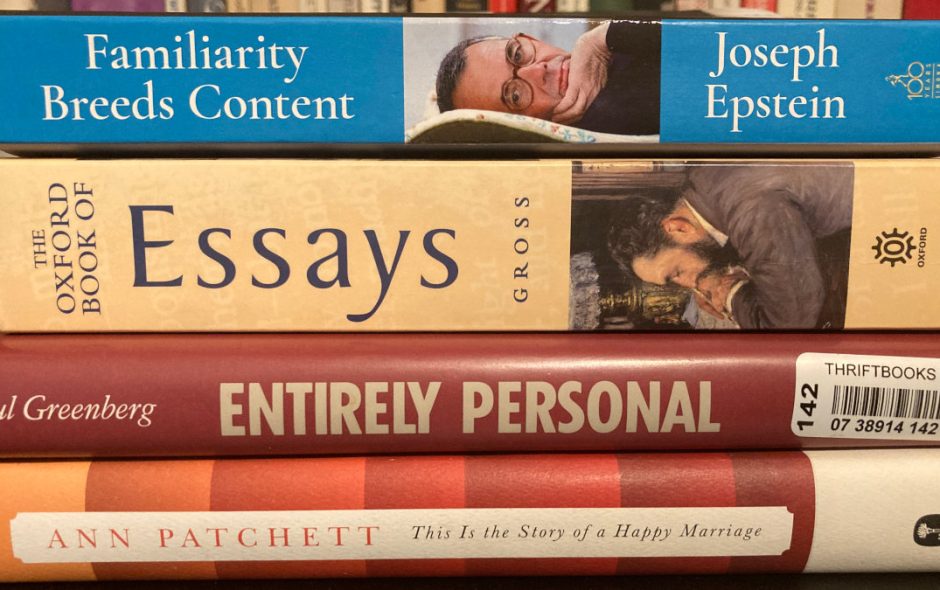
Maybe it’s just me, but essays are the wallflowers of the bookshelf. One of my favorite essayists, Joseph Epstein, is a celebrated master of the form, but have you ever heard of him? Two other favorites are acclaimed novelists, but it’s their essays I love. Two others are mostly political columnists who are, for me, at their most moving and memorable when they’re personal instead.

Last year I read a collection of 52 Anton Chekhov short stories, one per Sunday afternoon. I thought I might recreate that experience for 25 weeks by reading a weekly Joseph Epstein essay from a 2024 collection, Familiarity Breeds Content. But I’m having a problem. Most Sundays, I struggle to stop at just one.

Epstein’s “familiar” essays are conversational, personal, witty, and full of his love for language. One recent Sunday, I read “Balls-Up” about his hobby, juggling, but also about chaos, order, and life. Then I read “But I Generalize,” an insightful, intermittently irreverent musing on the generalizations we make about people. I laughed aloud in amusement but also in delight at what he can do with words.

Ann Patchett is a celebrated American novelist but also a brilliant essayist. Her essays are personal too and tend toward memoir. The first collection I read was This Is the Story of a Happy Marriage (2014), but that’s just the title of one essay, not the whole book’s topic. Some of my favorite things I’ve ever read about being a writer are in a long essay called “The Getaway Car,” and I still remember my delight in reading “My Road to Hell Was Paved,” about renting an RV for a long trip, so she could write about it.

Marilynne Robinson is that other novelist whose essays I prefer. She often writes at the intersection of faith, science, and modern life. In the title essay of When I Was a Child I Read Books (2012), she begins with her Idaho childhood and explores individualism and the American West. Two essays with Moses in the titles, on compassion and caring for the poor, showed me things I’d seen but never noticed in the Old Testament.

The late Paul Greenberg won a Pulitzer as a political columnist when I was a child; as an adult I read his columns faithfully for years. My favorites were personal. I managed to acquire a copy of Entirely Personal (1992), an intimate collection of his columns about family life, small towns, faith, human nature, and more. In the book’s second essay, “Growing Up in Shreveport,” I read, “There seemed two worlds back then, the Jewish and the outside world.” He writes of his grandmother tending him; “she could have arrived not from another continent but from another time.”

An attorney named Ivana, a.k.a. Lady Liberty, writes on Substack of politics and government during the week, and that’s fine, but her Sunday Essays about life are superb. She calls them “a small Sunday recess from the apocalypse.” They are fresh, artful, personal, and have a New York City flavor I enjoy. One recent Sunday Essay was “My Husband Runs Marathons. I Travel with a Cat.” The title barely hints at the delightful reading journey that awaits.

Like short fiction, the essay is a wildly versatile form. It offers a complete reading experience in a single sitting. And if this one doesn’t thrill you, the next one might.

Our tastes in essays may differ. But if you don’t enjoy fiction, or if you do, treat yourself regularly to a fine essay or two by someone you enjoy. We’ll have that in common, and we’ll become more interesting humans in the bargain.


This, ahem, essay originally appeared in The American Fork Citizen in October 2026. Reprinted with permission.


From the Author

David Rodeback

Thanks for reading!

Comments are always welcome, within the bounds of common civility and relevance. There’s a place for them below. Absolutely no marketing, please.

Subscribe below to receive alerts of new posts by e-email.

If you liked what you read here, please consider sharing.

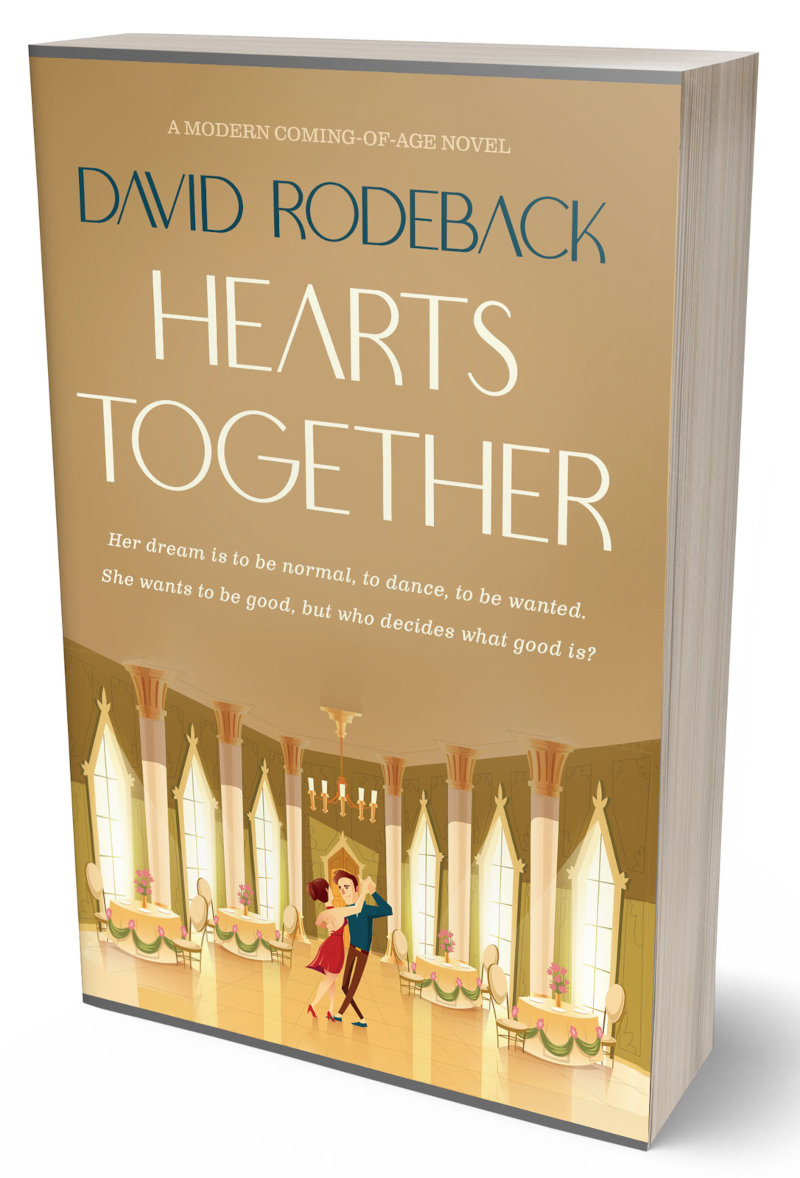
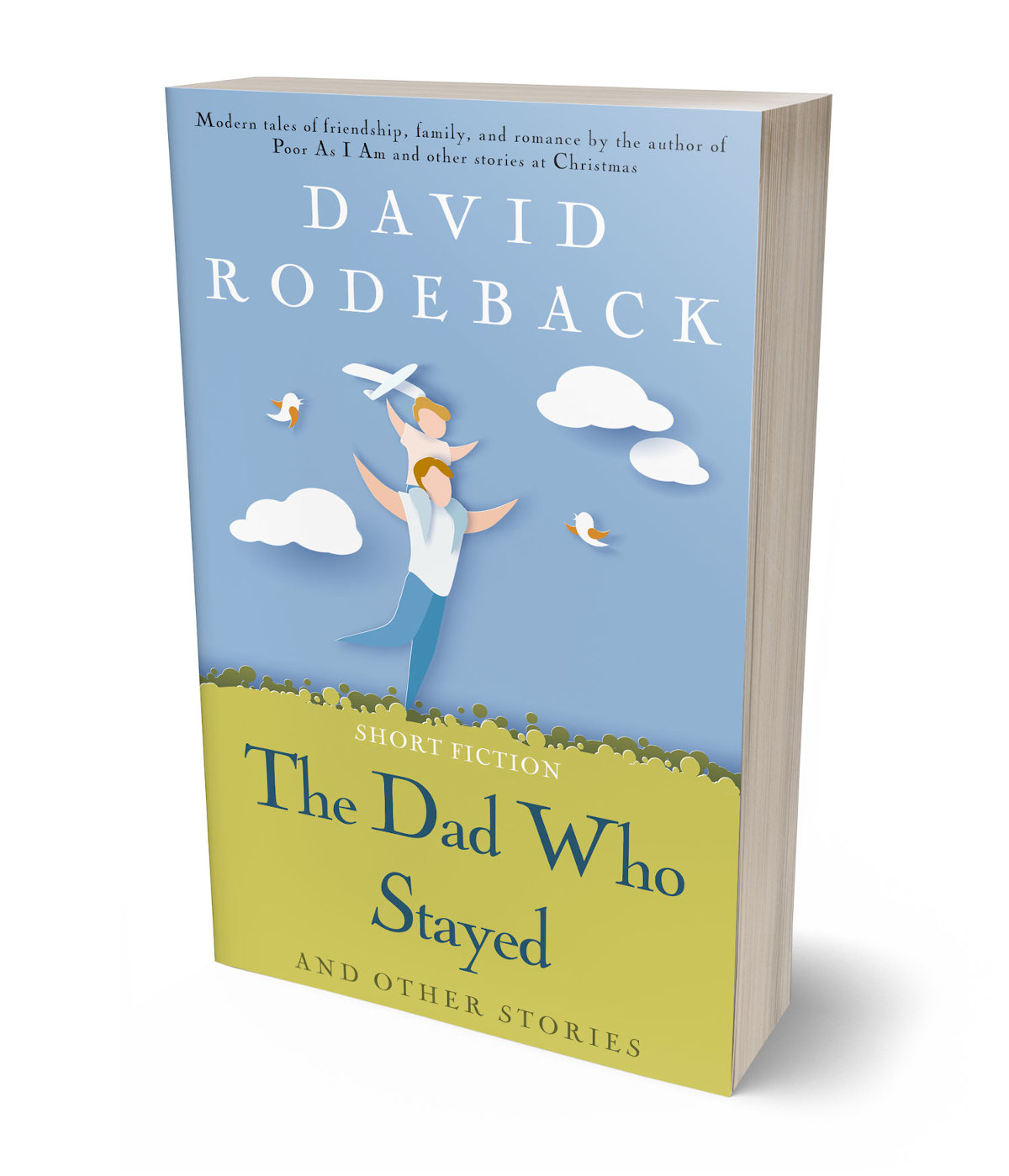
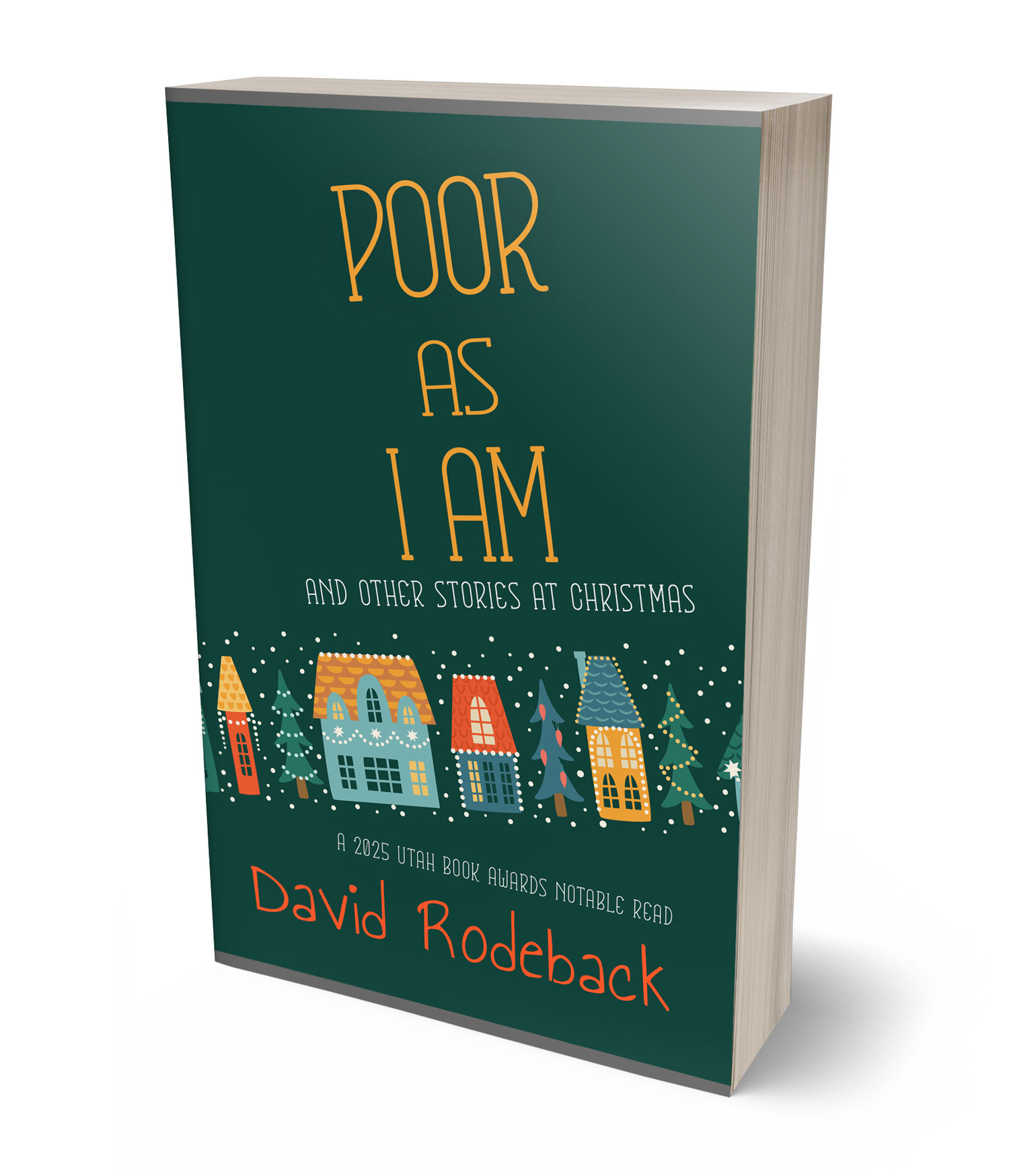
Do you enjoy reading fiction too? My two award-winning collections of short fiction and my new novel are available online at the usual retailers. Visit my press imprint, 60 East Press, to learn more.
That Teetering Stack of Books I Read in 2022 and 2023 (ish)

I love reading books, and I learned at least in time for graduate school to love writing about the books I read. My intention, these last two years or so, was to keep blogging about the books I read, as I had done sporadically for a while, then more methodically here, here, and here.

Those posts were fun to write, and they were well received, and the routine was simple enough. When I finished a book, I stacked it in a particular place until I had written about it here. Well, the stack has grown too large. I haven’t taken time to write about the books since September 2022, and I was playing catch-up then.

So today we catch up. I’ll list some books in passing but stop to chat about most, knowing full well I won’t do justice to any of them. Sixteen are fiction and grouped accordingly. Seventeen are nonfiction and separated into books about writing and others.

Radiant Moments: A Thanksgiving Reflection

I began this Thanksgiving morning by setting myself a task: to describe my gratitude for specific things which are not controversial. (I have little taste for controversy today.) I thought first of the largest things, such as God, family, and country, but the very ideas of these are currently controversial. You may safely assume my profound gratitude for them, but after a few moments I turned my thoughts toward smaller things. Granted, all things are smaller than the largest things.

So I made a list of specific things for which I have felt grateful in recent weeks, and nothing is too small. A hamburger is not too small. But soon it was clear that I had sent myself on a fool’s errand, because even a hamburger is controversial these days. And I suppose it shouldn’t surprise me, in a time when many consider everything to be political, that a hamburger is easily politicized too. (I am not grateful for this.)

So the following are only relatively uncontroversial. Some are only relatively small. They involve people, you see, and people are not a small thing – but we are smaller than God.

Now that I have made the list, I see that every item, in some sense and degree, is a moment. Today, as on many days, I am grateful for moments. Here are ten and a spare. They necessarily reflect my own tastes, opportunities, and associations, but perhaps they will call to mind some of your own moments.

In neither ascending nor descending order …

Recent Reading: 10 More Books and a Memory

The more I read, the more I want to talk about what I read — and I’ve been reading more lately. I don’t mean more than I’ve ever read before. There was graduate school at Cornell — in Russian literature, a landscape of giant novels (which I still love), countless poems and short stories, and sprawling artistic manifestoes. Long before that were nineteen days at my grandparents’ farm in April 1975.

Do you mind very much if I remember for a few moments before I list the books?

On Writing: “I can’t teach you how to have something to say.”

Here are a few more gems — I know it’s been a while — from Ann Padgett’s “The Getaway Car: A Practical Memoir about Writing and Life.” You’ll find it in This Is the Story of a Happy Marriage (New York: Harper, 2013, pp. 19-60), which you should buy — or borrow from the library — and read.

If you write.

Writing must not be compartmentalized. You don’t step out of the stream of your life to do your work. Work was the life, and who you were as a mother, teacher, friend, citizen, activist, and artist was all the same person. People like to ask me if writing can be taught, and I say yes. I can teach you how to write a better sentence, how to write dialogue, maybe even how to construct a plot. But I can’t teach you how to have something to say. (pp. 31-32)

Novelists Writing Essays . . . and a Novel

I had an hour to kill in a university bookstore a while back. The results were more less predictable. I read several pages each in two books of essays and was hooked.

I’m been working my way through them both, reading an essay now and then. I’m enjoying both so much that I don’t really want to finish anytime soon. I’m not in too much danger of that, either. I keep going back to savor essays I’ve already read: both the writing and the thought — not that the two can be separated.

Novelist Marilynne Robinson, of whose fiction I have read exactly none, has enraptured me with her collection of essays entitled When I Was a Child I Read Books. She takes up large, serious topics, like politics, society, Christianity, and individualism. I think she’ll take up the American West somehow, in essays I haven’t read yet. So far her writing serves her themes very well; this is not a small thing.

I’ve read as much of Ann Patchett‘s fiction as I have of Marilynne Robinson’s. Her writing and thought have an irresistible personal charm and candor; in fact, these essays are part memoir. The book is called This Is the Story of a Happy Marriage, after the title of one essay. (That story is quite a story, to be sure.) Other essays are about reading, writing, books, and topics I haven’t yet discovered.

When I want to savor rich writing, but I’m in a mood for fiction, lately I’ve been turning to Richard Russo‘s Pulitzer Prize-winning Empire Falls. I picked it up on remainder or at a library sale somewhere, because I saw it as a miniseries years ago and found it charming. The writing is dense and rich so far. The long, pseudo-historical Prologue — annoyingly set all in italics — is something to savor. I suppose a prologue ought to be that good, if it is to exist. I don’t resent the existence of this one at all.

(Links to books in this post are to my Amazon store. Purchases help to support this site. But libraries are great, too. So is Barnes and Noble. And Powell’s. And Sam Weller’s. And so forth.)