Reading Tom Hanks

Tom Hanks and I have something in common: we both write fiction. If you’ve read this monthly column for a while, you may have known that about me. But did you know that about him?

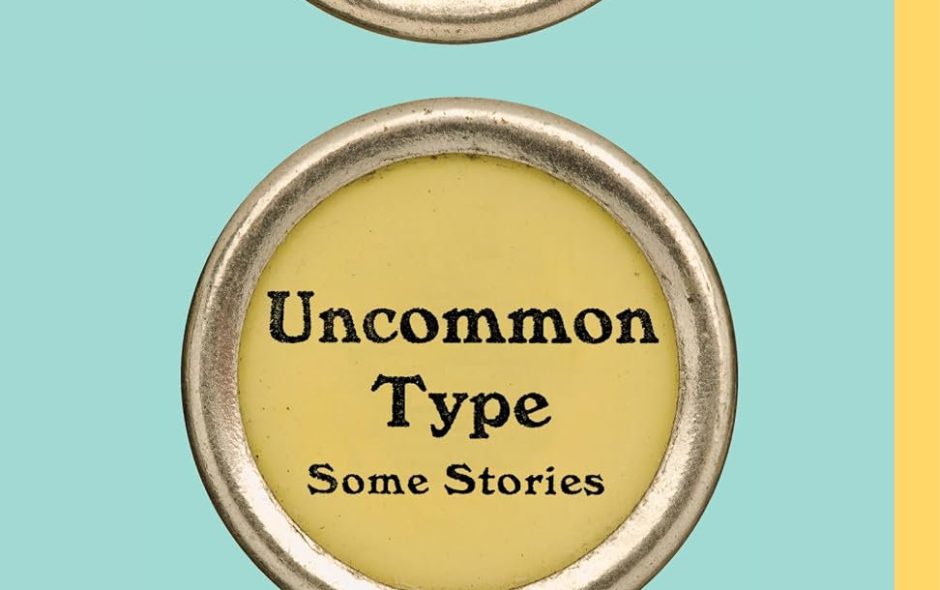
Several years ago, when his short story collection, Uncommon Type, was published, I read the first several pages, found it promising, and bought it. I didn’t read it right away; my TBR (to be read) pile is rather like a mountain range.

When I finally picked it up, my expectations were modest. I hoped to enjoy some of the stories, but I wondered if celebrity had more to do with their publication than quality. Long story short, so to speak, it was quality.

I love long novels, but short stories have their advantages. (By short I mean between five and forty printed pages, give or take.) For one thing, they offer a complete reading experience in one sitting.

They stand alone, but in an anthology or collection they may also share a common thread. In Uncommon Type each story has a typewriter in it. In “These Are the Meditations of My Heart,” typewriters play a major role, though they’re already antiques.

A recently divorced woman is moving on, putting “the Knothead” behind her. She buys a toy typewriter for five dollars at a church fundraiser on a whim. At home she wonders what one does with a typewriter in the twenty-first century. She thinks of six things immediately.

The relic barely works and cannot be repaired, so she finds a shop and trades it in for a sixty-year-old, state-of-the-art Swiss model. The old man in the shop could be in a Harry Potter book, selling wands to young wizards. He all but says that a typewriter chooses its owner, not the reverse.

It’s a charming, thought-provoking, artfully layered story, about much more than typewriters, and it fits neatly into seventeen pages.

Short stories can’t be as complex as novels, but a well-crafted short story can conjure a whole world, bring a few characters to life, and engage the mind and heart in multiple ways at once. In fact, some of our best writing is found in short stories—because they’re short.

As a writer I may spend dozens of hours creating one short story. That sounds like a lot, but it’s not. A novel takes months or years. Because my investment is so much smaller, I can take bigger risks in a short story. I can try things I couldn’t sustain for hundreds of pages and tell tales that are too small for a novel. I can experiment. I can be weird.

This has advantages for the reader too. I usually don’t even start reading a novel unless I already expect to enjoy it. But I’ll read a short story in any genre by any author just because it’s there. Some of our best reading happens with short stories.

Because it’s short, I can take more risks as a reader too. And if the one I just read didn’t land for me, the next one is a different story. I’m a lot more willing to turn the page and take a chance.

One of the longer short stories in Uncommon Type is “The Past Is Important to Us,” which combines near-future sci fi with time travel to the past. As it begins, two men are flying to New York City in a private jet with a transparent fuselage. Imagine looking through the floor of your airplane to the ground 40,000 feet below.

These are among the richest men in the world, having invented and patented the Shuffle-Access Digital Valve-Relay. One of them is hooked on time-travel vacations through a company which uses their invention. You’d think going back in time for just 22 hours, to a specific New York City hotel room on June 8, 1939, during the World’s Fair, might not be worth repeating again and again at $6 million a pop, but Bert Allenberry thinks it is.

How did the future look from the past? How will the past look from the future? What if we could go back and try a different life? It’s a wrenching, surprising tale.

The whole collection worked for me. Tom Hanks, beloved actor and director, can flat-out write. His 2024 novel, The Making of Another Motion Picture Masterpiece, is now in my TBR pile, perhaps not for long.


Originally published by The American Fork Citizen in July 2026. Reprinted with permission.


From the Author

David Rodeback

Thanks for reading!

Comments are always welcome, within the bounds of common civility and relevance. There’s a place for them below. Absolutely no marketing, please.

Subscribe below to receive alerts of new posts by e-email.

If you liked what you read here, please consider sharing.

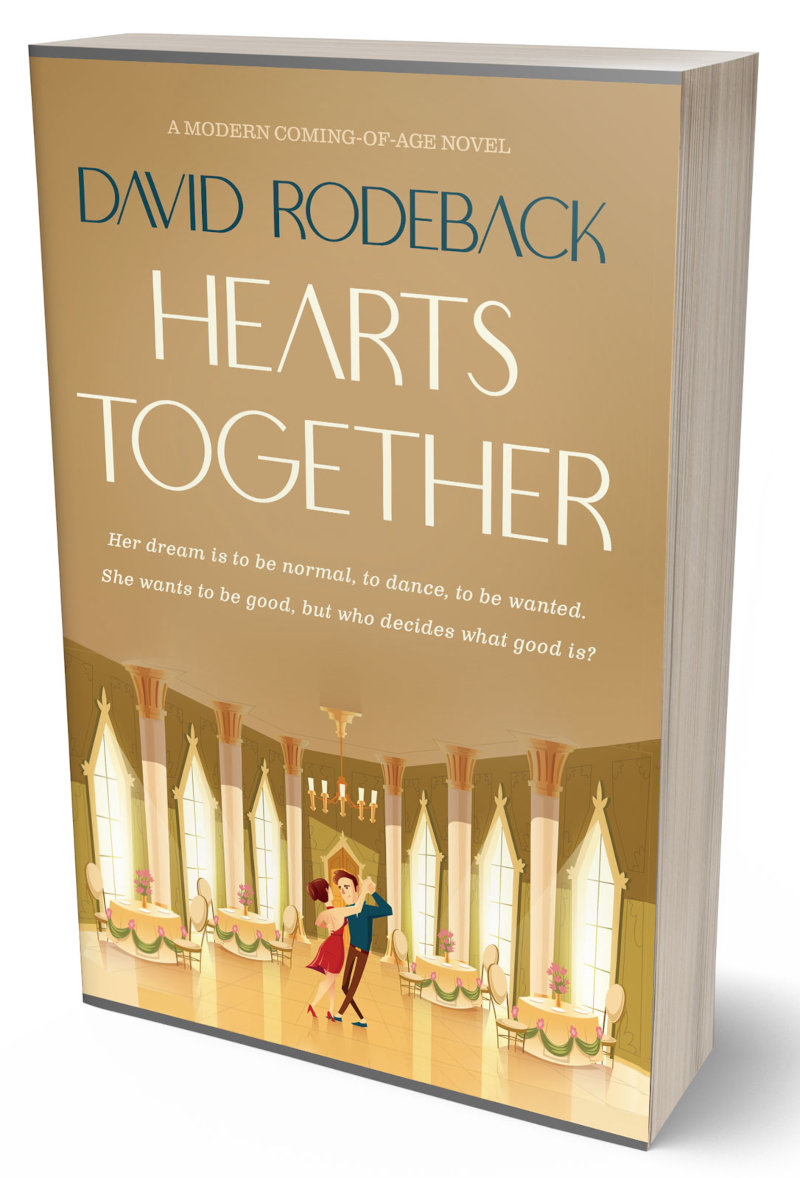
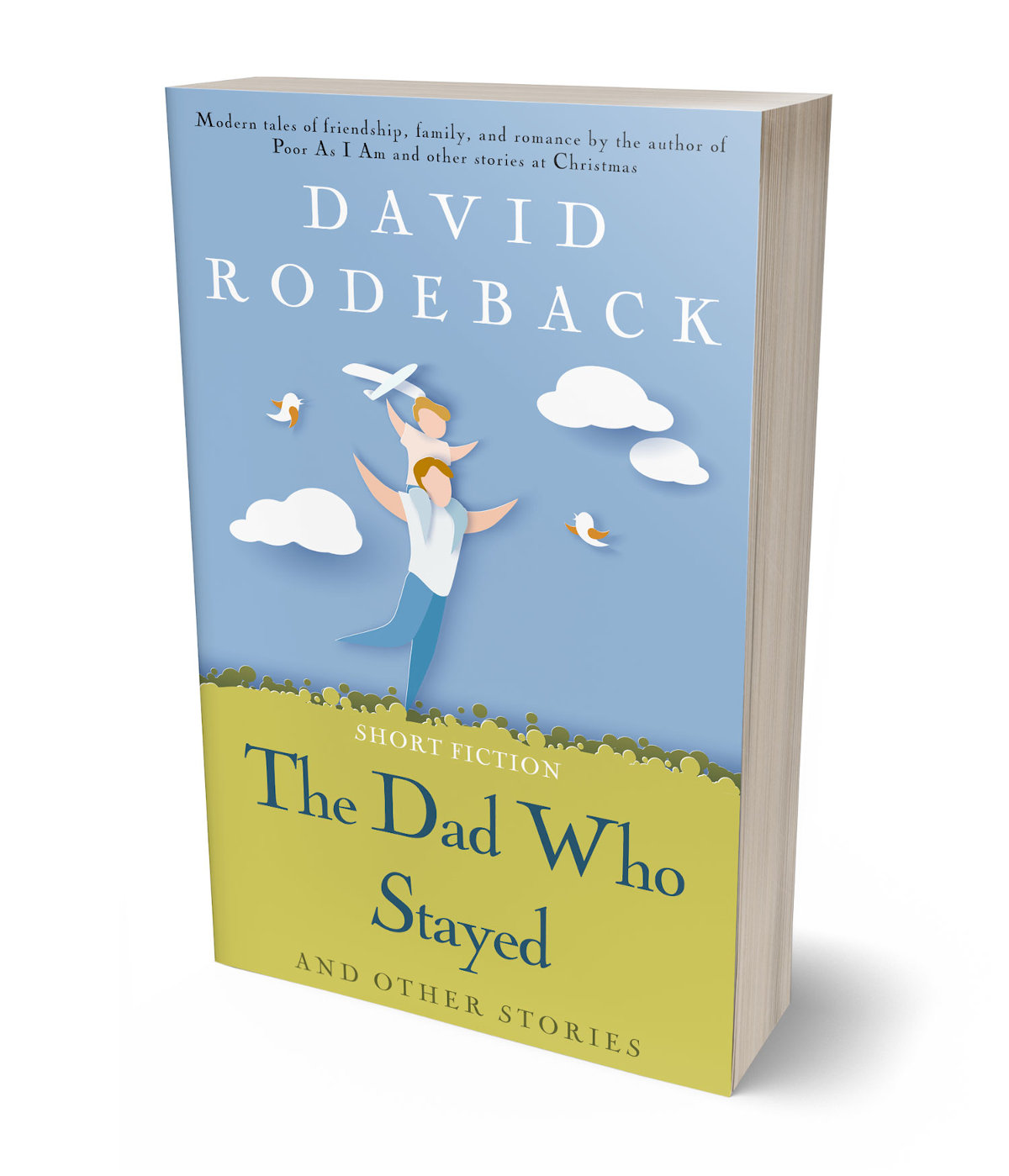
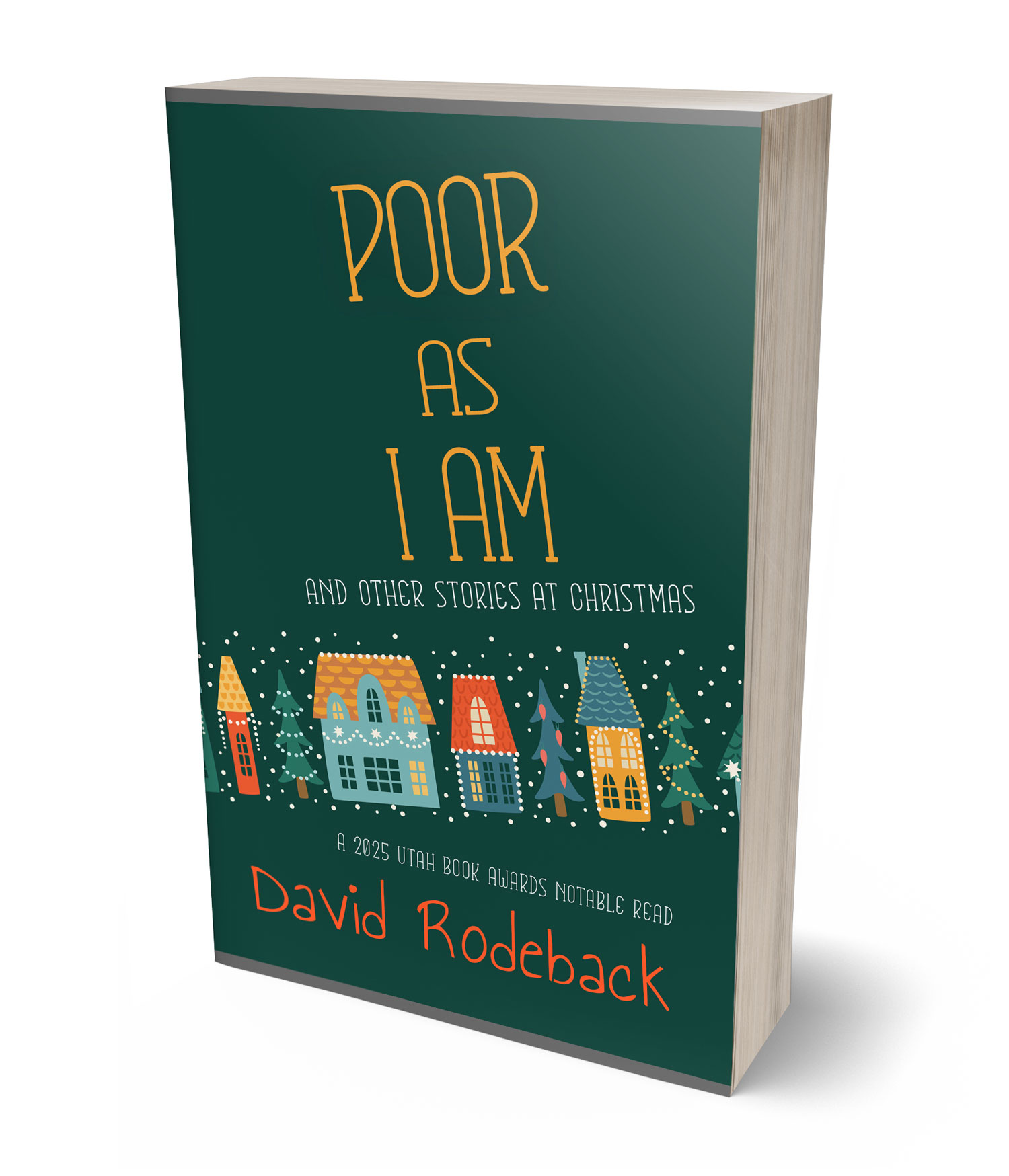
Do you enjoy reading fiction too? My two award-winning collections of short fiction and my new novel are available online at the usual retailers. Visit my press imprint, 60 East Press, to learn more.
In Which I Read My Fiction Aloud for World Read Aloud Day 2025

Today is World Read Aloud Day—or WRAD, because the world needs more acronyms. Is this the first you’re hearing of it?

The website says “15th annual,” but I first encountered WRAD only last year. I was not in time to do anything about it, except to make a note to do something about it this year.

A nonprofit called LitWorld created WRAD “to celebrate the power of reading aloud to create community and amplify new stories, and to advocate for literacy as a foundational human right.” Worthy causes all. Their website, LitWorld.org, has an activity packet, a social media kit, a web form to report your own activities, and many other resources, including links to—you guessed it—people reading aloud.

LitWorld and WRAD mostly focus on reading aloud to children, and we could make a long list of the benefits of doing that. But just between you and me, good things happen to youth and adults too, when we read aloud or are read to. I submitted a column to a local newspaper this week on that very topic. (I’ll link to it here if and when it’s published.)

To me, the obvious thing to do for WRAD is (ahem) to read aloud. So I got up early to read into a good microphone Monday morning before work, did some light editing after work, and now it’s just under 20 minutes of audio, with me reading three pieces of my own fiction aloud.

Abolishing Christmas (a short story)

Isaac turned the corner in the airport terminal and smiled warmly through his exhaustion. “Councilman Hirsch,” said the homemade sign in big block letters. The man holding the sign was Evan Jackson, his fellow city councilman. Evan’s welcoming, ironic grin said he was glad to see his friend but also enjoyed the gag of treating him like a VIP.

“Shalom, my friend,” said Evan without irony.

“Shalom,” Isaac said. They briefly embraced. “Thanks for picking me up.”

“My pleasure. How was your flight?”

“The second seemed as long as the first, though obviously it wasn’t.” Tel Aviv to JFK was hours longer than JFK to Salt Lake City. “How’s Dani?”

“My better half sends her greetings,” said Evan, “but she’s helping a different friend today.”

“Our loss.” Dani and Isaac’s own wife, Tovi, had been dear friends – but Tovi had been in the grave nearly a year.

Tovi, he thought. Toviel. God is good. He was just starting to believe that again – and though he had not always seen it, it had been the perfect name for her.

“How was your pilgrimage?” Evan asked as they waited by the baggage carousel.

“When I am there, I feel holiness. When I leave, some of it seems to come with me.”

“As it should,” said Evan.

“Yes, and I’d like to prolong it this time, if I can. I thought of you, by the way. The shofar was impressive, and I know your fondness for trumpets. And another reason.”

“What was that?”

“You call it the Holy Land too,” Isaac said. “Next year you and Dani should join me.”

“Let’s do it.” Evan’s sudden smile faded. “Forgive my asking, but how was it, you know, without … ?

“Holiness and loneliness are not incompatible. I managed to enjoy one despite the other. Perhaps it helped that I missed last year, because of her passing, and the year before too.”

“Because of her illness,” his friend said softly.

“Yes. Thanks for the card you gave me as I left. I rather enjoy having gentile friends who know better than to wish a Jew ‘happy Yom Kippur.’” He smiled sadly. “Happiness is not the point.”

“Holiness is more the point, as I understand it,” said Evan, “and I wish I could help you prolong it, but we need to have a serious chat with you this afternoon.”

“You said Dani didn’t come.”

“She didn’t. Vern’s waiting in the truck.”

“An unexpected turnout,” Isaac said. “It’s council business, then.” Vern Fellows chaired the Helaman City Council.

That Teetering Stack of Books I Read in 2022 and 2023 (ish)

I love reading books, and I learned at least in time for graduate school to love writing about the books I read. My intention, these last two years or so, was to keep blogging about the books I read, as I had done sporadically for a while, then more methodically here, here, and here.

Those posts were fun to write, and they were well received, and the routine was simple enough. When I finished a book, I stacked it in a particular place until I had written about it here. Well, the stack has grown too large. I haven’t taken time to write about the books since September 2022, and I was playing catch-up then.

So today we catch up. I’ll list some books in passing but stop to chat about most, knowing full well I won’t do justice to any of them. Sixteen are fiction and grouped accordingly. Seventeen are nonfiction and separated into books about writing and others.

There Might Be Another Way (a short story)

Pia had slept as late as she dared on a Sunday. She slipped into a pew halfway up the right side of the chapel just as the bishop stepped to the pulpit to begin the weekly sacrament meeting. She’d looked almost human in the mirror before leaving home, which was pretty good, considering.

She listened conscientiously to the announcements, which had little to do with her, then sang the opening hymn, “Jehovah, Lord of Heaven and Earth,” with as much of her usual fervor as she could muster. Her focus drifted during the brief invocation by one of her neighbors. It drifted further during some quick items of congregation business. But she managed to keep trying, at least, to ponder the Savior and his sacrifice, as the deacons passed the Sacrament of the Lord’s Supper to the congregation. Everyone at church called the bread and water simply “the sacrament,” but in the privacy of her own thoughts she preferred the more solemn and evocative phrase.

The bishop announced the first speakers, a girl of about fourteen and an old man she’d seen on Sundays but didn’t know, and she drifted away again. She flipped to the Notes app on her smart phone, where she’d composed a sort of letter in the wee, desperate hours—a letter full of things she could never say or send to Doug, her back fence neighbor.

She saw him in his usual place, across the chapel, sitting alone, one row further back, in a heather gray suit (her favorite) and a gorgeous green necktie. She tried to envision him sitting with a wife, when he had one, but she didn’t know him then, and she’d never seen his ex.

She should have entered the chapel from the other side, even if it took half a minute longer to get to the other door. She could have asked to share his pew. He’d have agreed, of course, and she’d have been no more distracted than now. She should have left for church a minute earlier.

Doug’s posture was attentive, but she recognized the expression of a man who was somewhere else. He often looked like that, though not when he was teaching the adult Sunday school class or chatting with her afterward, and usually not in their occasional conversations over their common fence.

What she’d written overnight, as if to him, was unthinkable, but she couldn’t resist reading it again.

Her Voice (a short story)

There’s nothing like the sound of a mom reading to her children, when they’re your children too. It’s the exact opposite of their nightmares, the universal antidote to whatever imagined horrors the darkness may conceal. It works on me too, easing me away from today’s and tomorrow’s cares. And everything sounds better in Ann’s British accent.

The Tale of Peter Rabbit, by Beatrix Potter. Read by Mum, for Jake and Amber.

“Once upon a time, there were four little Rabbits, and their names were . . .”

Jake and Amber are still young enough to enjoy snuggling in our bed for their bedtime stories, and they’re small enough to fit there between Ann and me. I’m in my pajamas because my bedtime is early too; I have to be on station by 5:00 a.m., almost an hour away. On work nights I hardly ever hear the end of the first story. I love falling asleep to Ann’s voice.

When it’s not a work night, I’m there for stories anyway. I love staying awake to her voice.

Sometimes in the middle of the night, half-awake for a fleeting moment, I’ll put my arm around the warm body beside me, and she’ll snuggle against me in her sleep and purr. At 3:45 a.m., when it’s time for me to get up, I try not to wake her, but she drowsily welcomes and sometimes returns a hug and kiss before falling back into sleep for a couple more hours.

I shower, dress, and pause for a moment in each child’s doorway, gazing happily on small, quietly slumbering forms in the pale white glow of the moon. Then it’s off to work.

That’s how things are for me at home, how they’re supposed to be. I’m not content with everything in my life, and I don’t always love a routine, but I love this one.

That is, I loved it until the storm came.

I Already Did (a short story)

Erin tried gently to pull me off the trail. It curved to the right; she wanted to go left. “Let’s go this way, Gary.”

The heavy overcast made it dark for late morning, but I’d have seen another path if it were really there.

We appeared to have the wilderness to ourselves for miles around, including the trail into the parched foothills, to what I thought was our destination. We’d hidden my scooter just in case, so no one would see it from the road, the trail, or the little parking lot.

“This is a perfectly good gravel path,” I said. “We’ll be less likely to meet snakes and other deadly things, if we stay on it.”

She smiled patiently. “Why is that?”

“Because things with claws, fangs, or big teeth know the humans use this path, so they probably avoid it. Unless there’s a bear waiting to steal our picnic basket.”

“I’m not sure it works that way.” She stared at the path, and her face darkened. “I don’t like this path. Too violent.”

I cocked my head and stared at her. “Too violent?”

“Look at all the little gravel,” she said. “You think it got that way on its own?”

“Got what way?” I rumbled. I loved her, weird thoughts and all, but today I was in no mood for crazy.

“All broken up, with sharp corners and rough edges. Imagine the violence required to turn ordinary rocks into this, so they can make a path out of it.”

I’d once heard a rock crusher at fairly close range. The sound was horrific, but it wasn’t from rocks screaming in agony or in fear of a painful death. You had to live to die.

“Besides, this path doesn’t go where we’re going,” she added, almost as an afterthought.

“Okay.”

We set off across the reddish ground, through the grayish sagebrush, toward a gap in the brownish foothills.