What I, the Reader, Owe the Author

Some books cost more than others. I don’t mean the dollars we pay for them. I mean the work done by the author and others, despite life’s challenges, great and small.

If you’ve seen the professional musicians in my family perform, you know they’re wonderfully talented. I watch them offstage too, so I see how much work they’ve invested to become the musicians they are, besides their preparations for specific performances. They never stop working and learning.

Writing is like that. About a dozen years ago, I decided to write fiction. That is, I decided to learn to write fiction. For decades I had written other things, with some success and sometimes professionally. But writing fiction is a different adventure.

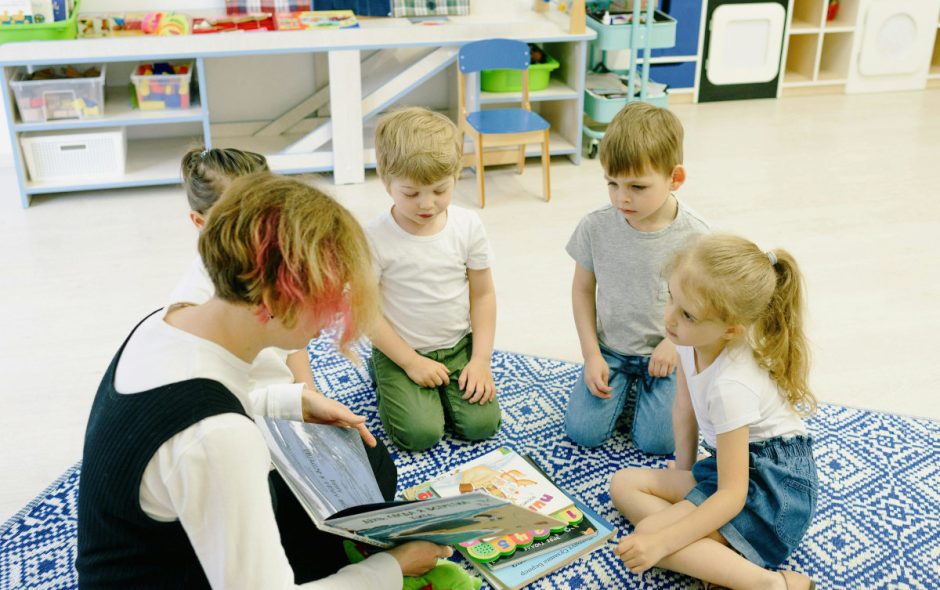
Teaching Children to Read Books

Less than half a hundred years ago, in a high school gym in southeast Idaho, I gave a brief valedictory address. When the commencement ceremony ended, two parents sought me out with a question: “How can we get our children to enjoy reading books?”

Looking back, I’m not sure why parents would seek out an unmarried, childless, newly minted high school graduate with a parenting question. But I had read a lot of books, and it showed.

“How often do they see you reading books?” I asked.

Not often, they allowed. I don’t recall what I said next. Maybe it was, “They need to see you enjoying books.” Maybe I just shrugged, suggesting they’d answered their own question.

I had a point then, but when I get that question now, I have more answers.

In Which I Read My Fiction Aloud for World Read Aloud Day 2025

Today is World Read Aloud Day—or WRAD, because the world needs more acronyms. Is this the first you’re hearing of it?

The website says “15th annual,” but I first encountered WRAD only last year. I was not in time to do anything about it, except to make a note to do something about it this year.

A nonprofit called LitWorld created WRAD “to celebrate the power of reading aloud to create community and amplify new stories, and to advocate for literacy as a foundational human right.” Worthy causes all. Their website, LitWorld.org, has an activity packet, a social media kit, a web form to report your own activities, and many other resources, including links to—you guessed it—people reading aloud.

LitWorld and WRAD mostly focus on reading aloud to children, and we could make a long list of the benefits of doing that. But just between you and me, good things happen to youth and adults too, when we read aloud or are read to. I submitted a column to a local newspaper this week on that very topic. (I’ll link to it here if and when it’s published.)

To me, the obvious thing to do for WRAD is (ahem) to read aloud. So I got up early to read into a good microphone Monday morning before work, did some light editing after work, and now it’s just under 20 minutes of audio, with me reading three pieces of my own fiction aloud.

Poke the Algorithms in the Eye: Read Books in 2025

Intricate modern algorithms have their place but don’t seem to know their place. They and their faceless custodians would rule, not serve, the world, and never mind the human cost. Some people blame algorithms for our intellectual, political, and cultural bubbles and the toxic tribalism that results. I blame them too, in part.

Social media algorithms would rather please or provoke than inform or connect. They aim to keep us scrolling, clicking, sharing, flaming, and otherwise engaging at the expense of everything else, including work, family, friends, neighbors, quiet introspection, real-world compassion, and calm perspective.

Amazon’s algorithm, understandably, likes to show me things I might buy. It’s not very clever sometimes. A good half of those “We’ve found a book you’ll love” e-mails point me to books I found myself, online or IRL, and already added to my Amazon wish lists. I don’t remember the last time I loved any of the other suggestions.

Writing What I Believe, Writing What I Love

A few years ago, I had some thoughts I wanted to test and refine about the fiction I’m writing. So I wrote them out. I didn’t share them beyond my critique group. Lately I returned to that writing and updated it into this essay. It’s partly an artist’s manifesto – that term seems too grand – and partly a look behind the curtain or under the hood. It is the back story of stories I have written, am writing, and live.

I’m posting it here in three parts. This is the first.

Am I?

Whatever you write, from fiction to commercial website copy – insert your content marketing joke here – someone has probably told you, “Write what you believe.” If not, allow me to be the first.

Write what you believe.

I don’t mean that we writers should focus all our time and energy on nonfiction which expounds and promotes our personal belief systems in political, religious, or philosophical terms. There’s a place for that. I do some of it. But today we’re talking about fiction.

I certainly don’t mean that our fiction should be tendentious and moralizing. Fiction is a well-traveled road to truth, but it loses traction when it slips from inviting us to think into telling us what to think, when the author keeps intruding to preach to us.

Recent Reading: 10 More Books and a Memory

The more I read, the more I want to talk about what I read — and I’ve been reading more lately. I don’t mean more than I’ve ever read before. There was graduate school at Cornell — in Russian literature, a landscape of giant novels (which I still love), countless poems and short stories, and sprawling artistic manifestoes. Long before that were nineteen days at my grandparents’ farm in April 1975.

Do you mind very much if I remember for a few moments before I list the books?

Books I’ve Read Lately (14 of Them)

Lately I’ve been finishing books I started reading in the last year or two — and enjoyed, but left unfinished. Today I’ll tell you about some of those, plus some books I finished more quickly, without leaving them to languish for months or years.

Meanwhile, the poster child for my problem is still unfinished: Victor Hugo’s Les Miserables (first published in 1862). I got about 150 pages in, loved it, and stopped. I recently restarted from the beginning. I’m further in now, but I still have over 1,200 pages to go; it’s the unabridged translation. I’m still loving it, but it’ll be a while before I can report completion.

Among the books I’ve finished, I read some just to read them. Others I read for research, because I’m attempting, as time permits, to learn the art, craft, and business of writing fiction. I enjoyed most of the books I list below in printed form and the rest as audio books.

After I decided this topic might make a fun blog post, I asked myself why I wanted to write it. There was time enough to wonder; some of my writing languishes unfinished for months, like my reading.

On reflection I don’t think my motive is to dazzle you with the breadth and depth of my reading; I know too many people who read far more than I do to be impressed with myself in this way, or to think you’ll be impressed. Besides, if I were trying to impress you, I’d probably exclude at least two or three of the books I’m about to mention. You’ll know which, I think, when you get to them.

It’s more a matter of my enthusiasm for books in general, for some (not all) of these particular books, and for people who read books. When I read a book, I want to talk about it. You’re welcome to join me.
Huntley Fitzpatrick: “I passed on the scotch and the smokes, but kept writing.”

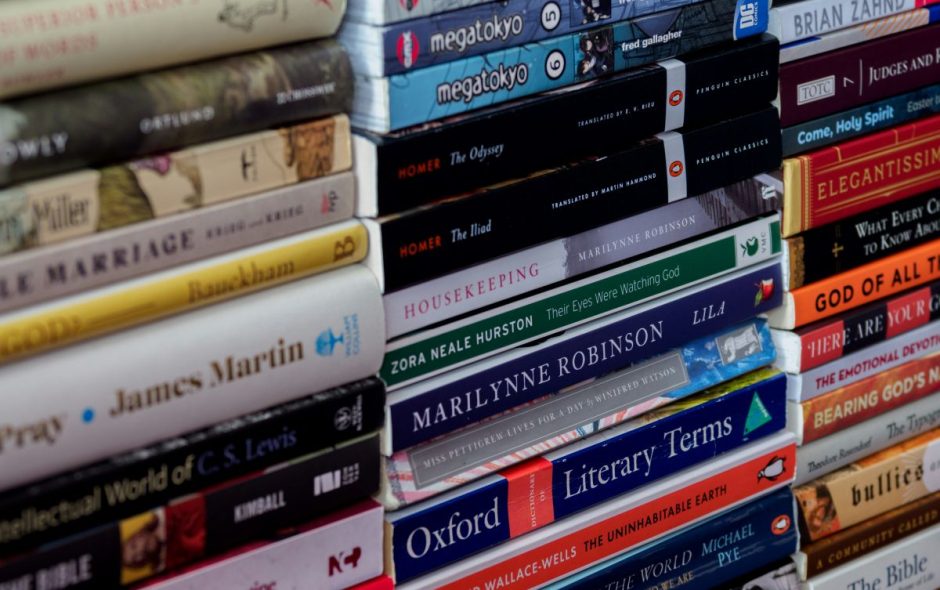
Yesterday, somewhat randomly, I ran into an author’s biography at Amazon.com, to which I point you for its style as much as its insight. Her name is Huntley Fitzpatrick. Apparently, she writes young adult fiction — how well or how prominently, I cannot say. I know of her only what I read there.

Here are some excerpts from her Amazon author page, where you should read the whole brief bio, if her charm speaks to you too.

I was lucky enough to be born to parents who read every kind of written material with interest and enthusiasm, and let me do the same. From the start I searched for books that let me fall in love…with the story and with the boy. For most of my childhood I divided my devotion between Almanzo Wilder from The Little House books, C.S. Lewis’ Prince Caspian and Tom in Louisa May Alcott’s An Old Fashioned Girl.

I figured out early that stories were what made sense of the world when it was confusing and made the best moments permanent. I was shy and nearsighted but good at anything that involved reading and imagining, so quickly decided the only logical career to pursue was writing. To this end my father gave me a typewriter (it was a long time ago), a package of Lucky Strike cigarettes, a bottle of Scotch and a note advising me to “Be Bold, Be Bold, Be Bold.” For my tenth birthday.