Some books cost more than others. I don’t mean the dollars we pay for them. I mean the work done by the author and others, despite life’s challenges, great and small.
If you’ve seen the professional musicians in my family perform, you know they’re wonderfully talented. I watch them offstage too, so I see how much work they’ve invested to become the musicians they are, besides their preparations for specific performances. They never stop working and learning.
Writing is like that. About a dozen years ago, I decided to write fiction. That is, I decided to learn to write fiction. For decades I had written other things, with some success and sometimes professionally. But writing fiction is a different adventure.
Since then, my books and tales have won some awards, and I spend some enjoyable hours teaching other writers. But writing is no less work than it was at the beginning, and I’m still learning.
I’m in good company. In 2024 celebrated author Katherine Paterson told some writers in Provo that she still faces her next book with trepidation. She knows how to write the many books she’s written, but she doesn’t yet know how to write the next one.
Months or years of research may go into the fiction and nonfiction we read, even before the writing. Then it can take months or years to finish the first draft of a book. First drafts are a mess; no veteran writer expects otherwise. But we celebrate them. Most people who think they have a book in their heads never get that far.
The revision and editing passes to produce the final draft may be numerous. Other people help the author with those, including editors and critique partners. If there are a hundred things to worry about when drafting a book, there are two hundred when revising and editing. It’s real work, but it’s how we make a book.
For the writer, revision is partly a process of exploring questions that involve the reader: What am I trying to say? What am I actually saying? What experience do I want to create for the reader? What is the reader’s actual experience? We can partially measure that last one by having beta readers read a manuscript when it’s nearly ready. Meanwhile, someone has to worry about other things too, including cover design, printing, distribution, marketing, and more.
As a reader, when I finally hold a book in my hand, I have at least a general sense of what it cost the author and others to create it, and sometimes I know details. Like those musicians I mentioned, even if the writer and everyone else are uncommonly talented, they still labored to produce this book—and to learn their art and their craft. I want to honor that.
As we wander deeper into the 21st century, I grow more conscious of a more important way to honor their work: being a good reader—which many people are instinctively, but others don’t seem to expect of themselves. I can focus on what the writer says, the experience the writer creates for me. I can read to connect with other minds, to find whole worlds to explore.
Where else would I focus? On myself, that’s where, like Narcissus looking for a mirror.
Does the writer spoon-feed me, so I don’t have to think too much? Does the writer tell me exactly what I want to hear? Has the writer carefully avoided every possible misunderstanding and misinterpretation, and every thought that might challenge me, and every word or phrase that might offend me, now and forever? If not, how triggered and offended can I be? How can I misread the book to make it about me and to pull the author down?
By contrast, what I owe the creators of a book is what a good reader does in any century. I meet the writer halfway. I’m open to new things, and new views of old things. I’m patient while stories and arguments develop. I allow others to disagree, and I’m willing to hold in my mind some thoughts that conflict with my own. I seek the experience of reading, not continuous affirmation sprinkled with a few fragments of offense, imagined or otherwise, to feed my self-righteous indignation.
Finally, do you wonder what I think the author owes the good reader? Many things. Here are three: honesty, trust, and thanks for reading.
First published in April 2026 by The American Fork Citizen. Reprinted with permission.
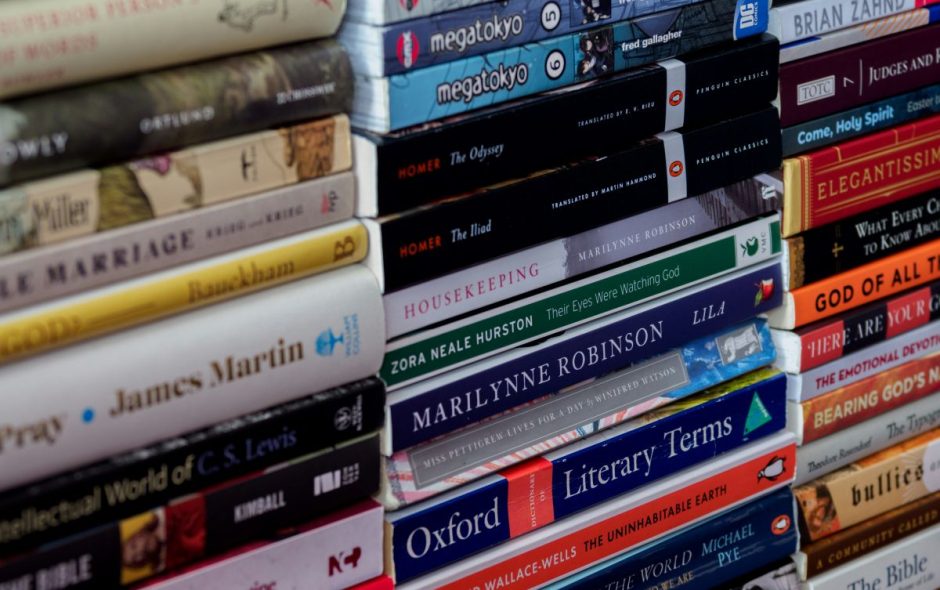
Photo by Brett Jordan on Unsplash.
From the Author

Comments are always welcome, within the bounds of common civility and relevance. There’s a place for them below.
Subscribe below to receive alerts of new posts by e-email.
If you liked what you read here, please consider sharing it with someone else who might enjoy it. If you’re on Facebook, you might consider liking or following my Bendable Light page there.
And if you’re interested in my published fiction, which mostly isn’t about politics, check out my new novel and my two award-winning collections of short fiction at 60 East Press.